

Here’s the short answer: no. A Tesla Model 3 and a Toyota Corolla sit in the same CTP vehicle class, and SIRA does not use fuel type as a rating factor. Your electric car gets priced on the same basis as a petrol or diesel car If you searched “ev ctp cheaper nsw,” you’ve landed in the right place.
This guide covers every CTP green slip factor that applies to electric vehicles in Australia. So why do so many EV owners expect a discount? And are there any ways your EV could affect your payments?
Here’s what actually happens when an electric car hits the green slip calculator. Read this article and bookmark this for further reading.
Does SIRA Treat Electric Cars Differently for CTP?
No. SIRA’s Motor Accident Guidelines group vehicles into classes based on use and size, not what powers them.
A fully electric car, a plug-in hybrid and a petrol sedan all fall under Class 1: Motor Car if they carry nine or fewer passengers and are used for private transport. There is no differentiation within Class 1 on the basis of performance, engine capacity or fuel type.
A small four-cylinder sedan is treated the same way as a high-performance sports car — and the same way as a battery electric vehicle.
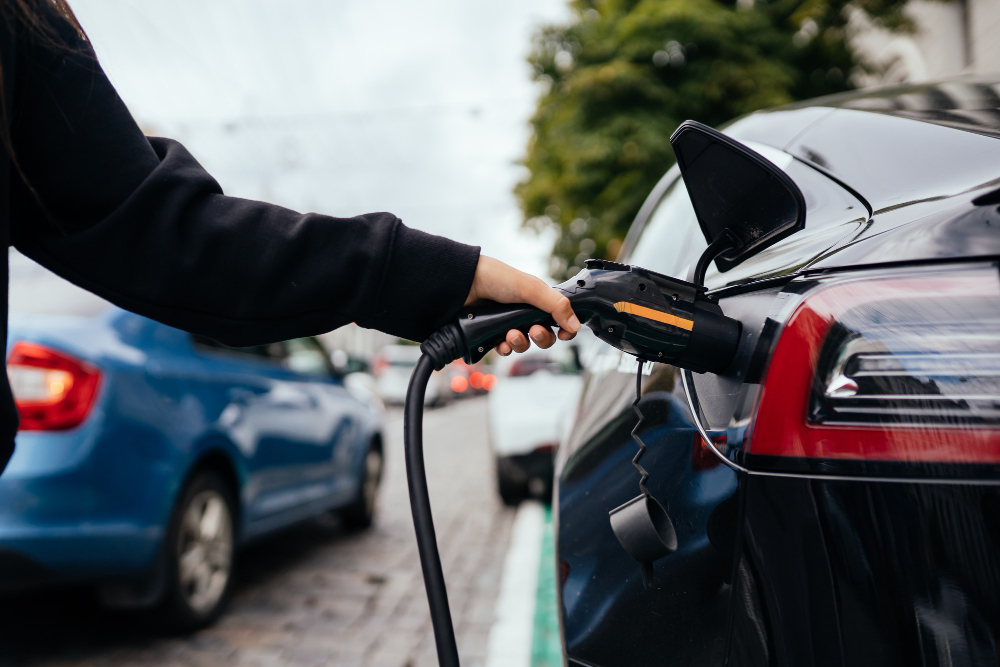
In short, whether you drive an electric vehicle (EV), one of the newer hybrid cars, or a car with a traditional petrol engine, SIRA’s CTP insurance cost is calculated the same way. The classification is based on vehicle use and passenger capacity, not what powers it.
The only vehicle type where electric gets its own sub-class is motorbikes: electric motorbikes sit in Class 10(d) alongside bikes with engines 225cc and under.
Read more about how SIRA set prices.
What Actually Sets Your EV’s Green Slip Price?
The same rating factors that set every CTP premium in NSW. Fuel type is not one of them.
SIRA says insurers may consider “several factors, including” the list below. It’s not a closed list, but these are the ones SIRA names publicly:
| Rating factor | How it works | Does your EV change this? |
| Vehicle class | Class 1 for passenger cars, EV or petrol | No difference |
| Rating region (postcode) | Five SIRA zones: Metro generally most expensive, Country generally cheapest | No difference |
| Driver age | Younger drivers pay more | No difference |
| Driving history | Clean record = lower premium | No difference |
| Demerit points | More points = higher price | No difference |
| Claims history | Past CTP claims can raise your premium | No difference |
| Vehicle age | Newer cars may be rated differently | Slight: most EVs are newer models, but this is about the car’s year, not its powertrain |
| Comprehensive insurance status | Insurers may consider whether you hold comprehensive cover. SIRA doesn’t specify which direction this moves your price. Check your PDS; insurers vary. | Possible, if you hold a comprehensive car insurance policy on your EV |
Your age, postcode and driving history do far more to your green slip price than anything under the bonnet. SIRA also sets a minimum premium for Class 1 vehicles.
For drivers under 55, it’s no less than 80% of the insurer’s base premium; for those 55 and over, no less than 75%.
Beyond these standard factors, insurers may also weigh your individual circumstances. NSW is one of the few states in Australia where drivers can choose their own CTP insurer, giving you the power to compare and save money.
Rating factors explained: → Why Is My Green Slip So Expensive?
So a Tesla Pays the Same CTP as a Corolla?
Generally, yes. In the same postcode, with the same driver profile, yes, roughly. Both are Class 1 motor cars under SIRA’s vehicle classification system.
G4E’s existing guide to EV benefits backs this up: “the rate is the same as it would be for equivalent petrol or diesel vehicles, depending on your make and model.”
Where small differences appear:
- Vehicle age. A 2024 Tesla Model 3 is newer than a 2016 Corolla, and vehicle age is a rating factor. But this applies to any new car, not just EVs.
- Safety ratings. Newer EVs tend to score five-star ANCAP safety ratings, but SIRA hasn’t confirmed safety ratings as a standalone CTP pricing factor. Whether this influences risk modelling behind the scenes is something only the insurers know.
- Insurer variation. The gap between the cheapest and most expensive CTP insurer for the same car and driver can be $100–$200+. That gap exists whether you drive electric or petrol.
- EV battery cost perception. Some owners worry that an expensive EV battery makes their car costlier to insure under CTP. It doesn’t. CTP covers injury to people, not vehicle parts. For example, a $15,000 battery replacement cost is irrelevant to your green slip premium. Where electric car batteries do matter is in your comprehensive insurance cover.
Your EV won’t get you a CTP discount. But it won’t cost you more either.
What About Comprehensive Cover for Your EV?
This is where CTP and other car insurance options split. CTP covers injuries to people in a motor vehicle accident. It does not cover damage to your car, fire, theft, battery fires, accidental damage, charging cables or alloy wheels.
Here are the key things to understand about car insurance cover for EVs:
- A CTP green slip and a comprehensive policy do not provide the same coverage. CTP does not cover party fire and theft, EV charger equipment, or body panel damage.
- For those risks, you need separate cover. Providers like NRMA Insurance offer both CTP green slips and comprehensive car insurance policies in NSW, but they are purchased separately.
- NRMA is one of the few NSW CTP insurers offering additional at-fault Driver Protection Cover.
For that, you need a separate comprehensive car insurance policy or third-party property damage cover. Some comprehensive policies include roadside assistance and authorised repairs; your green slip does not.
Always read the Product Disclosure Statement for full details; insurers vary.
CTP and comprehensive are two separate policies with two separate jobs. Driving an EV doesn’t change that split.
Further read on CTP vs comprehensive: → Difference Between CTP Insurance and Comprehensive Insurance
Could EV Green Slip Pricing Change Down the Road?
Possibly. Three things to watch:
- Accident data. As the EV fleet in NSW grows, insurers and SIRA will collect more data on EV-specific accident frequency and injury severity. If EVs prove safer per kilometre (lower centre of gravity, newer safety features, driver assist tech), that data could eventually feed into CTP risk modelling.
- Telematics. Usage-based pricing (pay-as-you-drive) is being discussed across the insurance industry. If it arrives for NSW CTP, low-mileage drivers, including many EV owners, could benefit. But that would apply to any low-mileage driver, not just EV owners.
- EV-specific safety data. Organisations like EV FireSafe, funded by the Australian Department of Defence, are researching EV battery fire incidents and emergency response across Australia. As this data matures, it could inform how insurers model EV risk within the CTP scheme.
For now, none of these changes have been introduced. Your EV’s green slip price in 2026 is set by the same rules as every other car on the road.
The broader EV journey in NSW is shifting the cost equation of EV ownership beyond CTP. Falling electricity rates, especially for drivers who charge via solar panels at home, mean lower running costs overall. But none of these savings flow into your green slip price. CTP pricing remains governed by SIRA’s rating factors, not your fuel or electricity bill.
What to Do Now
- Don’t assume your EV gets a green slip discount. It doesn’t, and no insurer can offer one based on fuel type alone.
- Compare all six licensed CTP insurers for your actual postcode. The gap between cheapest and most expensive can be $100-$200+, and that’s where real savings sit, regardless of what powers your car.
- If you’re buying a new electric car, sort your CTP before registration day. G4E’s calculator lets you compare all six insurers in under two minutes, and every policy sold plants a tree. That’s one way your EV purchase does make a green difference.
- Keep your comprehensive car insurance separate from CTP in your head. Your EV’s battery, charging cables and body damage need a comprehensive policy. Your green slip covers people, not parts.
- Know what happens if you’re hit by an uninsured driver. If the at-fault vehicle has no CTP, NSW’s Nominal Defendant scheme, funded by a portion of every green slip premium, steps in to cover your injury claim. This applies whether you drive an EV with an electric motor or a car with a petrol engine.
- Understand what counts as an insured event under CTP. Your green slip covers personal injury from a motor vehicle accident on NSW roads, not property damage, not battery faults, and not charging incidents.
People Also Ask about CTP pricing on electric vehicles
These are the questions NSW EV drivers ask most about CTP pricing.
1. Are green slips cheaper for electric cars in NSW?
No. SIRA classifies electric cars as Class 1 motor cars, the same class as petrol and diesel cars. Fuel type is not a CTP rating factor in NSW. Your green slip price depends on your postcode, age, driving history and vehicle class, not your powertrain.
2. Do EV owners pay more for CTP because of battery fire risk?
No. Battery fires and electrical fires are not part of SIRA’s CTP premium calculation. CTP covers injuries to people, not vehicle damage. Fire and theft are covered under comprehensive car insurance, not your green slip.
3. Can I register my EV in a cheaper area to save on CTP?
No. Your green slip must reflect where the vehicle is actually garaged. Providing a false address can result in financial penalties and adjustments to your CTP cover. The smarter move: compare all six NSW CTP insurers for your real postcode.
4. Is CTP more expensive for a Tesla than a regular car?
Not because it’s a Tesla. Both sit in Class 1. Any price difference comes down to your age, postcode, driving history and which insurer you choose, not the badge on the car.