A green slip calculator compares CTP prices from all six licensed NSW insurers in one search. To do that, it asks about your vehicle, the people who drive it, and your insurance history. Have those details ready before you start.
Insurers use different rating factors, which is why six prices for the same car can differ. Start your quote in the green slip calculator, or read on to see what it will ask.

What should I have ready before I start?
Gather these before you open the calculator:
- Your registration due date
- The vehicle’s year, make, model and body shape
- The postcode where the vehicle is normally garaged, as recorded on your registration
- The usage recorded on your registration papers
- Dates of birth for the registered operator, the registered owner and the youngest driver
- The owner’s demerit points lost over the past 40 months
- Any crash in the past 5 years where a driver of the vehicle was at fault
- Any licence suspensions or restrictions, or drink or drug driving convictions or fines, for any driver in the past 3 years
- Your current CTP insurer and how long you have held that policy
- Any other car insurance you hold, such as comprehensive cover
- For a business vehicle: whether you can claim back the GST
Enter your record honestly. The calculator page notes that insurers verify your details before they confirm the final price.
What does the calculator ask about my vehicle?
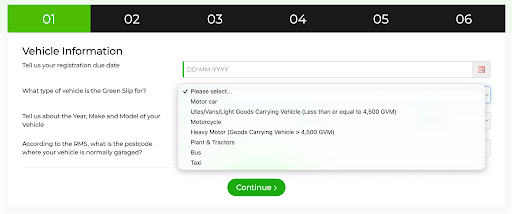
It starts with the vehicle itself. You pick from seven vehicle types, from cars and utes to motorcycles, trucks over 4,500 kg GVM, tractors, buses and taxis. For a motorcycle, you also pick an engine size band.
Then you add the year, make, model and body shape. For heavy goods vehicles, it also asks for the GVM and your industry. SIRA lists the vehicle’s age as one of the factors insurers can use.
The form then asks how far the vehicle travels each year, in bands from under 5,000 km to over 20,000 km. It also asks for the postcode where you garage the vehicle. SIRA lists where you park the vehicle as a rating factor.
Some postcodes cross two CTP premium regions. In that case, the calculator asks you to confirm whether you garage the vehicle in one of a short list of suburbs.
What does it ask about me and my drivers?
It first asks whether a person, or a company or organisation, holds the registration. It then asks for the registered operator’s date of birth, and later the registered owner’s.
It also asks whether anyone under 23 drives the vehicle, and for the youngest driver’s date of birth and gender. Age is one of the factors SIRA lists. The form also asks how long the least experienced driver has held a licence, and whether any driver holds a provisional licence.
You confirm whether the drivers hold a valid NSW licence. You also say whether you consent to the details you entered being checked.
Why does it ask about my driving record?
Because driving history, demerit points and claims history are all rating factors that SIRA lists. The calculator asks about:
- The owner’s demerit points over the past 40 months. Each insurer treats points differently. Our guide to why the same points cost different amounts explains this.
- At-fault accidents by any driver. The form covers the past 5 years, then narrows to 3 and 2 years.
- Any licence suspension, cancellation, disqualification or restriction, and any drink or drug driving conviction or fine, for any driver over the past 3 years.
So two drivers with the same car can see quite different quotes.
What does it ask about my insurance?
The calculator asks whether your green slip is current, a little overdue, or long lapsed. It also covers brand-new and interstate vehicles. It then asks for your current insurer, how long you have held that policy, and whether you will need a blue slip to register.
It also asks about any other car insurance you hold, on this vehicle or another one. You choose comprehensive, third party property damage, or none, and then the insurer and how long you have held it.
Holding comprehensive cover is one of the factors SIRA says insurers may consider. The form also asks whether you have had a continuous relationship with NRMA, through insurance or roadside assistance, and for how many years.
Does business use change my quote?
It can, and not always in the direction people expect. The calculator asks for the usage recorded on your registration papers. For business use, it asks how many vehicles your business runs and whether you can claim back the GST.
Only businesses registered for GST can claim it back. If you can, the insurer uses a separate rate. SIRA’s Motor Accident Guidelines let insurers add a loading of 6.5% to 7.5% for these policies. Check with your accountant if you are unsure.
When can’t the calculator give me a price online?
In a few cases, it cannot give you a price online:
- Some vehicle types. For certain vehicles, the calculator shows a message that it can only quote over the phone.
- Dates too far ahead. The calculator accepts a renewal date up to 3 months before the expiry shown on your registration certificate. A later date gives an error.
- Lapsed registrations. The calculator asks whether your due date passed more than 21 days ago. After 21 days, a 6-month term is no longer an option under Service NSW rules. After 3 months, the NSW Government cancels the registration.
What should I do after I see my prices?
Pick the price that suits you, then confirm it with that insurer before you pay. SIRA advises this, because the insurer may ask for more or different details than a comparison tool.
After you pay, Service NSW says most insurers send your policy details to Transport for NSW electronically. Our guide to green slip quotes in NSW explains the timing. If a price changes at the insurer’s checkout, our guide on whether calculator prices are accurate explains why.
To see which factors the calculator treats as having the most effect on price, check the calculator page.
Key points
- The calculator asks about your vehicle, your drivers, your driving record and your insurance history
- Have the owner’s demerit points from the past 40 months, and any at-fault accidents from the past 5 years, ready
- SIRA lists age, driving history, demerit points, claims history, vehicle age, parking location and comprehensive cover as rating factors
- Some postcodes cross two premium regions, so the calculator asks you to confirm your suburb
- Claiming back GST adds a 6.5% to 7.5% loading, not a discount
- Confirm your chosen price with the insurer before you pay
Get prices from all six insurers in the green slip calculator.
People Also Ask: Green Slip Calculator Questions
These are quick answers to the questions drivers ask about the calculator form. Each one links back to the rules behind it.
1. Why does the green slip calculator ask about demerit points?
Demerit points are one of the rating factors SIRA lists. The form asks about the owner’s points over the past 40 months, and each insurer weighs points differently.
2. Why does it ask if I have comprehensive insurance?
SIRA confirms that insurers may consider whether you hold comprehensive cover when they set your CTP price.
3. Why does it ask which suburb I garage in when I have already entered my postcode?
Some postcodes cross two CTP premium regions. Confirming the suburb tells the calculator which region applies.
4. Is it cheaper to say the vehicle is for business use?
Not always. If you can claim back the GST, SIRA’s Guidelines let insurers add a loading of 6.5% to 7.5%. Answer with the usage recorded on your registration papers.