In NSW, each vehicle that needs CTP carries its own green slip, whether you own one car or run a fleet of fifty. What changes with a fleet is the admin around it. A large enough fleet can share one renewal date, and business use, company ownership and GST credits all change the details you give the insurer.
This guide covers those differences. For fleet pricing, see our small business fleet guide. To price a single vehicle now, use the green slip calculator.
Is a fleet green slip different from an individual one?
Not in the cover it gives. Each vehicle in a fleet still has its own green slip, and SIRA confirms that every green slip carries the same level of CTP cover. Insurers price each one on that vehicle’s own details.
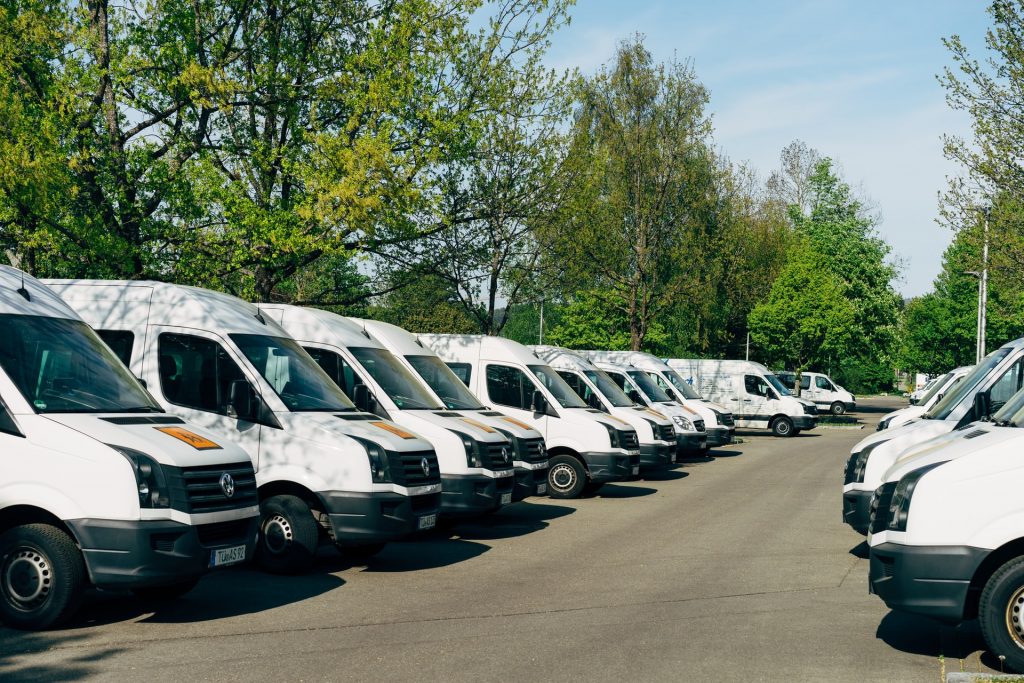
The differences sit around the policy:
- Renewal timing. A qualifying fleet can line up all its registrations on one date.
- Usage. Business vehicles carry a different usage code on their registration.
- Ownership. A company can hold the registration instead of a person.
- GST. A business that can claim back GST pays a separate premium rate.
- Pricing. Our small business fleet guide explains when insurers may offer fleet pricing.
Does the green slip cover anyone who drives a fleet vehicle?
Yes. The green slip belongs to the vehicle, not to a driver. The NSW Government explains that CTP pays for injuries and deaths caused by the owner or by anyone else at the wheel. So the vehicle’s green slip applies when an employee drives it.
Any vehicle on NSW registration needs a green slip from a NSW insurer. A vehicle left unregistered past its due date may also lose its CTP cover, so keep each renewal on time.
Can I put my whole fleet on one renewal date?
Yes, if your fleet is large enough. Service NSW runs a Common Expiry Date (CED) scheme. It lets a fleet register its vehicles so that every registration falls due at the same time.
To join, your fleet needs at least:
- ten light vehicles, or
- two heavy vehicles
Conditional and seasonal registrations cannot join a CED fleet. To apply or get help, contact the CED team at Transport for NSW on (02) 8837 0481 or Ced.Fleet@transport.nsw.gov.au.
Does SIRA treat a big fleet differently on price?
Only a very large one. SIRA’s Guidelines set a floor on how low an insurer can price vehicles in classes 1 and 3c. These are motor cars and light goods vehicles.
For vehicles outside a fleet, an insurer cannot go below 80% of its base premium. The floor is 75% when the youngest driver is 55 or older.
For this rule, the Guidelines only count a fleet of 5,000 or more of these vehicles, under one owner or a related group. For those fleets, the floor drops to 60%. So a business with ten or twenty cars faces the same floor as a private owner.
Should I register my vehicle for private or business use?
Your registration records how you use the vehicle as a code. Service NSW lists examples such as PRIV for private, BUSG for business general, PNSR for pensioner and PPG for primary producer general.
The choice matters for two costs:
- Vehicle tax. The NSW Government charges more vehicle tax for business use. Take a car or truck with a tare weight of 1,501 kg to 2,500 kg. Its yearly tax is $596 for private use and $924 for business use.
- The private registration discount. The NSW Government’s one-off $100 discount applies only to privately registered light vehicles. It runs between 1 September 2026 and 31 August 2027.
The green slip calculator also asks for the usage recorded on your registration papers. So use the same answer for your green slip as appears on your rego.
If your use has changed, you can change the code at a service centre. You may be able to do it by phone on 13 77 88 instead. That option is for vehicles in a person’s name, switching only between private, business general and pensioner.
What about food delivery drivers?
Food delivery is not the same as rideshare. A rideshare car pays an extra CTP charge only for kilometres travelled with a paying passenger on board. SIRA describes this as a rate per fare-paying kilometre, on top of an initial premium the rate is 10 cents a kilometre in metro areas and 6.6 cents in the country.
A trip that carries only food or parcels has no paying passenger. That does not settle which usage code your car needs, though. No Service NSW or SIRA page we have found says whether part-time delivery work counts as business use. If you are unsure, ask Service NSW on 13 77 88 before you renew, and declare the same usage on your green slip.
Rideshare drivers who carry passengers should read our rideshare CTP guide.
Does it matter if a company owns the vehicle?
Yes, because the insurer asks. The green slip calculator asks whether a person, or a company or organisation, holds the registration. It also asks for the registered operator’s details and, for business use, how many vehicles the business runs.
When a person holds the registration, Service NSW lets you record a business name on the papers. Service NSW calls this a courtesy name. You add or change it at a service centre, or sometimes by phone.
How does GST change a business green slip?
If your business can claim back some of the GST on the green slip, the insurer uses a separate set of rates. SIRA’s Motor Accident Guidelines set these as the standard rates plus a loading of 6.5% to 7.5%. Each insurer picks its own loading within that range.
Your net cost then depends on the GST you claim back. Ask your accountant to compare the two before you answer the GST question. Only businesses registered for GST can claim it.
What happens when a fleet vehicle is sold or written off?
It depends on what happens to the registration. SIRA explains that you may get a partial refund when a vehicle becomes unregistered because it was written off, taken to a wrecker or stolen.
To claim, cancel the registration in person at a Service NSW centre. Then give the insurer the letter or receipt that Service NSW issues. The insurer works out the refund from the cancellation date and may deduct a fee.
If you sell a registered vehicle, there is no refund, because the green slip stays with the vehicle. Allow for the remaining cover when you set the sale price. Our green slip refund guide has the full steps.
When should I buy green slips one by one?
A small operator can simply buy each green slip separately. Insurers price each vehicle on its own details, so the cheapest insurer can differ from one vehicle to the next. Compare all six insurers for each one.
Ask about fleet pricing or admin help when you:
- run enough vehicles to qualify with an insurer, as our small business fleet guide explains
- want one renewal date through the CED scheme
- run trucks, buses or taxis, which the online calculator may only quote by phone
For heavy vehicles, our guide to truck green slips by size covers the weight bands. For buses and taxis, see our bus CTP and taxi CTP pages.
Key points
- Each vehicle that needs CTP carries its own green slip, with the same level of cover
- The green slip covers whoever drives the vehicle
- Fleets with at least ten light vehicles, or two heavy vehicles, can apply for one Common Expiry Date
- SIRA’s lower price floor applies only to fleets of 5,000 or more cars or light goods vehicles
- Business use attracts higher vehicle tax, and the $100 private discount does not apply
- Claiming back GST means a 6.5% to 7.5% loading on the premium
- Selling a registered vehicle brings no refund, but a write-off, wrecking or theft can
Compare green slip prices for each vehicle in the green slip calculator.
People Also Ask: Fleet and Business Green Slips
These are short answers to the questions business owners and drivers ask most. Each one links to the rule behind it.
1. Do I need a business green slip for Uber Eats?
No Service NSW or SIRA page we have found says food delivery counts as business use. The extra rideshare CTP charge applies only to kilometres with a paying passenger, so food-only trips do not attract it. If you are unsure which usage code fits, call Service NSW on 13 77 88, then declare the same usage on your green slip.
2. Can I put all my fleet’s green slips on one date?
Yes, if your fleet qualifies. Service NSW runs a Common Expiry Date scheme that lines up every registration on one renewal date. You need at least ten light vehicles or two heavy vehicles. Vehicles on conditional or seasonal registration are not eligible. To apply, contact the CED team at Transport for NSW on (02) 8837 0481.
3. Is business registration more expensive?
The vehicle tax is higher. For a car or truck with a tare weight of 1,501 kg to 2,500 kg, the NSW Government charges $924 a year for business use. Private use costs $596. The one-off $100 discount, for renewals between 1 September 2026 and 31 August 2027, applies only to privately registered light vehicles.
4. Do I get GST back on my green slip?
Only if your business holds GST registration and can claim the credit. In that case, SIRA’s Motor Accident Guidelines let insurers charge a separate rate, with a loading of 6.5% to 7.5% on the standard premium. Your net cost then depends on the GST you claim back, so check the numbers with your accountant.
5. Does my green slip cover an employee who drives the car?
Yes. The green slip belongs to the vehicle, not to one driver. The NSW Government explains that CTP covers deaths and injuries caused by the owner or by anyone else driving the vehicle. Keep the registration current, because a vehicle left unregistered past its due date may lose its CTP cover.